Surgical fixation for broken bones
Fracture Surgery (ORIF)
Detailed information about this procedure as performed by Dr. Abdul Hannan in Lahore.
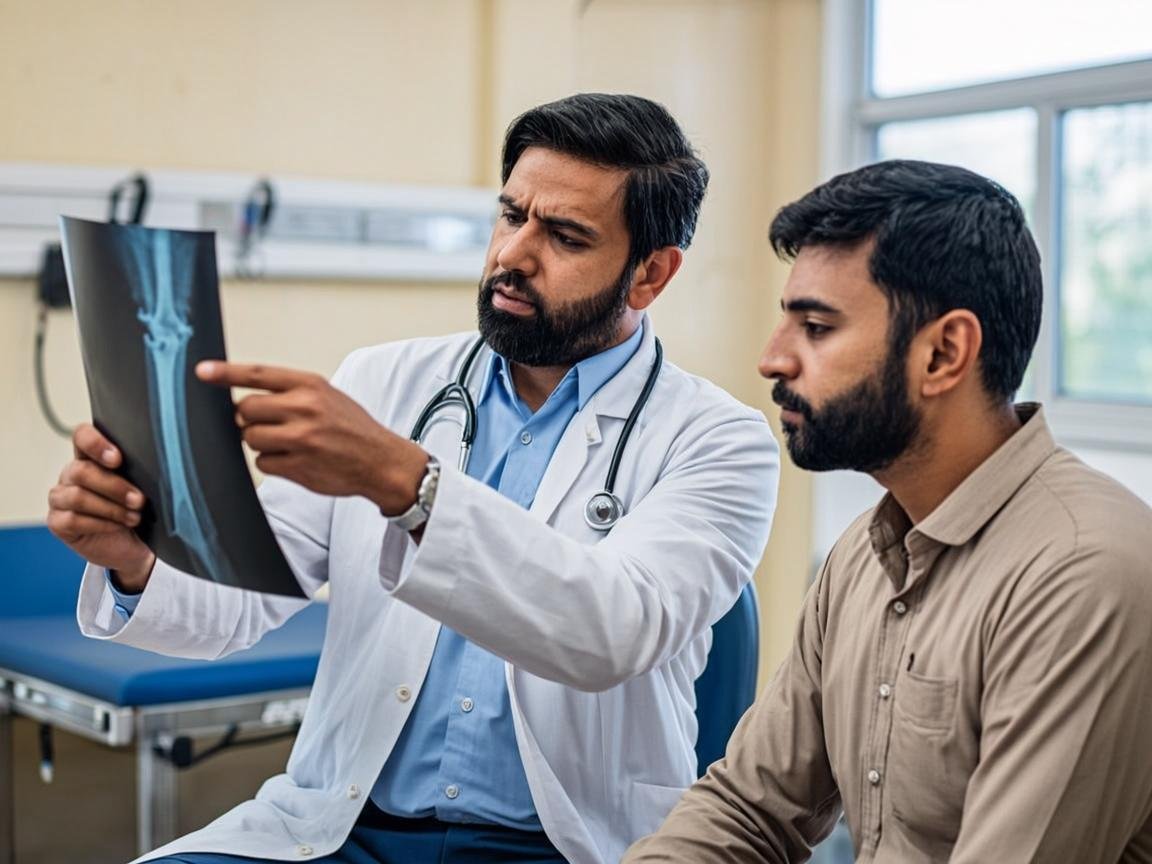
Open Reduction and Internal Fixation (ORIF) is a surgical procedure used to treat fractures that cannot be adequately managed with casting or splinting alone. The term "open reduction" refers to the surgical exposure of the fracture to realign the bone fragments, and "internal fixation" refers to the use of metal implants (plates, screws, nails, or wires) to hold the bone in the correct position while it heals. This is one of the most commonly performed orthopaedic procedures and is a core part of Dr. Hannan's surgical practice.
Types of Internal Fixation
- Plates and screws — used for fractures near joints and in bones where the anatomy is complex
- Intramedullary nails — a metal rod placed inside the hollow centre of long bones (femur, tibia), ideal for shaft fractures
- External fixators — pins and frames outside the body, used for severe open fractures or temporary stabilisation
- K-wires and tension bands — used for smaller fractures, particularly around the elbow and hand
Dr. Hannan's Experience
Dr. Hannan's orthopaedic residency at King Edward Medical University and Mayo Hospital — one of the busiest trauma centres in Punjab — provided extensive experience in managing a wide variety of fractures, from simple to highly complex. This experience, combined with ongoing surgical practice, means patients can expect careful pre-operative planning, precise surgical technique, and structured post-operative follow-up.
Discuss Fracture Surgery (ORIF)
Book a consultation to learn whether this procedure is appropriate for your condition.